Aloha, as our global Island and Ocean community grows here in Kauai, Hawaii, locally, our hearts are spread out around the world right now to the families, friends, communities, and organizations we’ve spent time with and shared through the World Team journey.
We send love out, and hope somehow you may feel in your heart that space is held for YOU. Deep gratitude remains for the heart YOU bring, or have given, to the idea and vision for World Team Now, and to our World Team project over the years.
Coming into this Holiday tide, it has been difficult to be objective and share our progress and growth, as so much continues to change. We are grateful to participate in the United Nations 3rd Ocean Conference in Nice, France, this summer. We now have a global public policy ratified for Marine Protected Areas (MPAs) in the open Ocean, and finally at least addresses the topic of the areas Beyond Boundaries of National Jurisdiction (BBNJ), with some healthy infusion of what could be the beginning of more environmental and social justice for all species, and our water bodies, too. BBNJ is set to go into action next year…
May the light we each hold in our hearts help better ignite the “Lighthouses” around the world to become beacons of hope, in this United Nations “Decade of the Ocean,” where multistakeholder partnerships (Indigenous peoples, tribes, hubs, groups, the private and public sectors of local and global government, and corporations alike, are seemingly making an effort to change, and better work together on common goals.
One heart at a time, we are engaged in holding a peaceful transformation for each sovereign being, as collective systems change, living into virtues. We are shining the light for being pioneering in how we REGRENERATE innovation, keeping the perspective of the value of nature-based organic wisdom, for a world where we can give what is best for us all to live together, for a renewed future.
The social & environmental movement (“The Global Movement”) is gaining momentum from voices growing louder and right now it’s the Youth Movement’s time. As the youth around the world rise today March 15th, I am thankful for sixteen-year-old Swedish Greta Thunberg’s bold voice, courage and stand for our future– demanding action for the global climate crisis, and leading the next generation of activists. Fridays for Future School Strike for Climate, became replicated by youth around the world, who agreed with the logic, why go to school and learn science, if the adults leading the government would not only just ignore science, but choose to deny the science applied to policy? Youth are making the choice to protect their future and generations to come, by cutting classes for the day and instead they take part in demonstrating and demand action on climate change. Hear it from their own voices in this article about their motivating story and more from Greta’s Ted Talk here. On the eve of the climate strike she tweeted; “Tomorrow we school strike for the climate in 1769 places in 112 countries around the world. And counting. Everyone is welcome. Everyone is needed. Let’s change history. And let’s never stop for as long as it takes. #fridaysforfuture#schoolstrike4climate#climatestrike
Global Youth Climate Strike at Columbus Circle
The Youth movement rising is naturally programmed with a generation that seems to prioritize the well-being of the planet, and they also come in wired to embrace technology, science, biodiversity, and nature. With the inner ability to respond to the urgency, the youth are not just adding their voice to the conversation of nature and humanity’s perceived extinction crisis; the youth have built a movement that is gaining momentum. The youth movement’s motivation is clear; it’s their future, and they want a planet to call home.
The big story is only beginning. Greta Thunberg’s recent Noble Peace Prize nomination comes as no surprise, after all, it’s been centuries since a teen, would be positioned to make history leading a revolution, and she just may do that– with a little teamwork.
Meet the youth leaders, who are organizing the USA national movement for the Youth Climate Strike School Strike for climate and are teaming up globally for this potentially historic event.
With the climate crisis, youth are confronted with a future that their generation may not get a chance to see, living here on planet earth, unless we all make different choices.
This is the moment not only for world leaders to adopt bold progressive climate policy, commit to 100% renewable energy, but to really hear and take into heart all children’s future. It is a time not just for governments alone but for all sectors of life to get into action and do everything possible for rapid transformation for the next generation. The burden lives within each and every one of us to grow this movement and act.
I’ve watched the Youth Movement over the years, but last Fall 2018 they started to grow and gain momentum in the organization. With the Duke and Duchess of Sussex Prince Harry and Meghan Markel as UN Youth Ambassadors, and the United Nations hosting a myriad of youth events (more on that in an upcoming article) Certain celebrities, VIP, and leaders have contributed inside that framework. But what Greta did was organic and core and the very spark needed to ignite the movement lit up by her commitment.
The Youth, Women, Indigenous Peoples, The Asian/Pacific Islanders, and a multitude of people, are all voices that need to be heard. The global climate crisis is a reality which can no longer be ignored; it’s time for all people to find a role.
The Youth Movement began for me too, as a grade school student, and I have grown up inside the global social environmental movement with the journey to make the World Team project, and with the nonprofit World Team Now, I founded, along with many other NGO’s in the climate movement since 1989. In grade school, I wrote a letter to the President of the USA, because of my deep concern about the environment, and wanted to know what would happen when I grew up? I actually got a letter back which inspired me to believe that I too with one voice, could make a difference. More is written about the journey in World Team Now’s prior blogs, and in addition this is a differentblog here (and soon to be published in a book). That action was the beginning of many youth projects and events covered around the world.
The Environment, our collective home and in the USA the leadership of the Environmental Protection Agency (EPA) has undergone a much-needed change— Scott Pruitt has resigned. Read more here:
For me, this event touches both the personal and professional areas of my life. As I’ve shared in prior blogs “Growing Up With EPA” and “EPA in Action-Moving Forward” here:
The question I asked as a child under the age of 10 still remains unanswered, in honest. “Who is in charge of the Environment?” The answer brings up a huge inquiry that we are collectively beginning to prioritize and bear witness to—what role does humanity play with the environment? How important is the environment to humanity?
This controversy with the United States “Environmental Protection Agency” is serving to awaken more people to the challenge of how to manage governance of collective resources. Does it truly serve us all to have one agency that is influenced by national politics? We know that we humans can imagine better systems for our earth and our environment. We are so thankful more people are awakened to this issue, and unfortunately, it all too often takes a crisis or scandal, to arise to do better. Surely the investigation of the present EPA leadership will continue, and now the second in command will temporarily lead with the same mandate, but as the drama unfolds our hope is that more people will be engaged in understanding, participating and get into action to show respect for our common home.
Yet in contrast, on the other side of the planet in the Pacific Island Region, during the annual session of the Forum Fisheries Committee Ministers Meeting in Raratonga, Cook Islands, someone who brings knowledge and experience for the people and the environment was given an opportunity to serve. The next Director-General of the Forum Fisheries Agency was just awarded to a well-qualified dedicated professional woman, Dr Manumatavai Tupou-Roosen. Secretary-General Dame Meg Taylor said, “I am very proud that a daughter of the Blue Pacific has been appointed Director General. The Forum Fisheries Agency plays an extremely important leadership role for our fisheries, one of the most important resources for our people.”
Our vision is that one day there will be a leader who can lead with the mandate of an agency like EPA—to protect the environment. Maybe they will even enroll others beyond country to follow. It brings to question, does it truly work to have our collective environment regulated by individual countries?
Perhaps there is a better model of a representative from each region of the world that could join together to address these collective challenges with our common oceans, sky, and earth.
The United Nations Sustainable Development Goals (SDGs) are on a track to explore opportunities to unite beyond country through 2030. Can we address and organize quickly enough to respond to the changes happening in our environment through political structures?
Will people rise to explore what “We the People…” really means beyond country? What role will people play, with our environment ultimately? These are questions our World Team project has been and continues to explore with our non-profit World Team Now, and in the future with World Team®.
June 21, 2018, Summer Solstice Malibu, California, USA
I know I’m not alone when I say I love the ocean! I think there is value in organizing people to focus around the action in a day like “World Oceans Day,” (which was June 8th) or “Earth Day” or even one’s “Birthday”!
The love for the ocean is something most of us have in common. It’s when summer comes, (or when we go to another part of the world), that is when most people begin to build ocean consciousness. Ocean consciousness is usually around going to the beach. So how do we show appreciation, and celebrate the way the ocean gives to the planet, and interacts with life beyond country, all over the world?
It was an honor to participate in the United Nations Solutions Panel as a speaker. Also, I covered the conference as a journalist. With a death in the family simultaneous at the events’ climax, I learned that it was too many roles to play at the same time. Here are some past tweets, a Facebook post, and a newsletter to give you the feel of the diversity of experiences:
Suzanne met with and interviewed Peter Thomson, Fijian diplomat and President of the General Assembly of the United…
This year, Oceans Day was celebrated at the ocean itself: being with the ocean and holding conversations locally at the beach with people about the ocean’s meaning and importance related to islands and a myriad of solutions to plastics and individual choices. Most people at the ocean had no idea about World Oceans Day or the UN’s Sustainable Development Goal #SDG14, so this work took on a different value, and tone.
This experience brought up the question: Is the love we carry for our common home, nature, and the ocean prioritized in our daily lives now, even if we don’t live near the ocean? I thought I had prioritized the ocean until I lived on the ocean in Fiji, literally for a total of six months working on our World Team project. I lived in a villa actually out on the ocean.
From the back porch of the villa, I could dive into the ocean. From my bedroom, I looked out on its vast, ever-changing horizon mirroring some of the most beautiful sunrises ever. From the opposite side of the bedroom, each sunset was better than the last. The living room was actually a “living room,” with large glass circles as the floor, a window to watch the wildlife in the ocean: colorful fish swimming below my feet at high tides, and the pink and aqua blue neon florescent crabs in the sand at low tide.
I realized the ocean breathes too –inhaling and exhaling, as waves go in and out and with the high and low tides – breathing a way to organize life in and around Oceania. The two category 3 hurricanes that came through while I was there caused a great loss for people and island life. It is significant that when we consider the big picture, in the past few years, the extreme weather and tropical storms have increased globally. Do we all realize that the choices we make here in the developed region of the world dramatically affect what happens in other parts of the world with Climate Change?
Yet the stewardship of the ocean in the Pacific Island region’s culture is considerable, and there is a lot for the developed world to learn from how the native islanders interact with the ocean. Passed on from generation to generation are ways to not just look to the stars for navigation, but to the ocean for understanding life.
“Chimneys” Photo Courtesy of “Dive 4 Life” Fiji
Prominent is the biodiversity of species and preservation; fish as a considerable food source, and coral reefs as life-sustaining. The ocean is central in the Pacific Island Region of Oceania, and people have learned to listen and watch the ocean and its tides and species for how life can be better organized and prioritized. By nature, the respect and love of the ocean is core to the culture and village communities I spent time within Fiji.
Next to the villa along the shore of Koro Sun Resort in Savusavu was “Dive 4 Life” where they teach and lead ocean journeys scuba diving (PADI Certification & Instruction), snorkeling, and fishing adventures. We will share more about Dive 4 Life coming up. Nearly every day in Fiji, one can experience a way to become more intimate with the ocean.
I wonder how it can be that when I arrived on one of the most pristine, untouched outer islands left in the world, in the middle of the Pacific Ocean with virgin sand from human footprints- there was plastic garbage from other regions of the world washing up on shore. Plastic waste, the shipping industry, nuclear hazardous and toxic wastes, ocean acidification, climate change, overfishing have all challenged the ocean we love. We all now have heard that if we keep going at this rate with plastics, by 2050, there will be more plastic in the ocean than fish. On the outer Fiji island, where our nonprofit, World Team Now, has been working, local villagers reported recently that right where sea turtles usually come up on the beach to lay their eggs, instead, there was a giant sea turtle strangled by plastic. Time for action: Here are 20 ways to plastic proof your routine.
So many of us enjoy what the ocean gives us: seafood to eat, waves to wide, sunsets to reflect upon – we think about the ocean related to fishing, surfing, swimming, sailing/boating, snorkeling, wave energy, and tidal energy – what we can get out of the ocean. I wonder how many people are truly aware that not only is the ocean beautiful, and evokes wonder, but that it actually helps us breathe and is critical for the balance of earth systems. Oceans actually breathe in for us by the plankton absorbing carbon dioxide, as much as 50% of what we humans are polluting into the air since the beginning of the industrial age. The challenge is that the change in the temperature of the ocean influences the ability of plankton to ingest the carbon dioxide. Plankton forms the base of the food web on the ocean. The temperature of the ocean and the atmosphere are coupled as a cause and effect; mirroring. Thus we face a dire positive feedback condition of warming, causing more CO2 to remain in the atmosphere. It’s time to think about how to give back to the ocean. Our World Team project is so eager to begin to show some of these solutions in real time, on an island and we are gearing up for action now. We plan to have many of you join us at least virtually next year.
Just the same way we created this mess with plastic and other wastes, we can altogether work to clean it up. There are innovative solutions now. In Fiji, I learned how to re-plant the ever important mangroves. We can replant coral. We can repopulate and protect fish. We can create monitoring systems to address illegal fishing and protect endangered species, we can choose alternative renewable forms of transportation, and all of these systems are indeed connected.
Every morning I awoke to the sound of the ocean breathing in and out its waves as water splashes up against the villa and nearby shore. To be put to bed by the soothing sound of the oceans gentle waves is a grace to grow living with the ocean.
Do you wonder what the world would look like if we focused our attention, to giving respect and appreciation of the ocean in each breath? Let’s consider organizing our effort by each breath, thought, word and action. Maybe then we could make Oceans Day, Surf Day, and Earth Day be every day. What if their principles and elements at the core of these singular days happen every day? Are you willing to consider the power of choice to aggregate the collective consciousness to take action for the ocean every day? Could we make a world of difference?
Here is an excerpt of the lyrics of World Team’s rap song first performed at the United Nations Earth Summit/Global Forum 1992.
What’s the solution for the pollution of our ocean?
May we remember the ocean is all of the time, ever-changing, yet consistent in gifts? On this day of Summer Solstice in the Western Hemisphere, may we see the light of perspective for oceans value; every day.
Fiji Pacific Island Region, Oceania Photo by Suzanne Maxx
Join World Team Now for Earth Day, and find something just for you. Around the World Team Project Earth Day is every day. It is a constant process to re-evaluate giving of your T.ime, Energy, A.ction, and M.oney- to live in better balance with our resources.
“Energy” being a conscious life force of wellness in mind, body, and spirit. The strength and vitality required for sustained physical or mental activity. “Energy” in our world meaning; available power– how we actually power our way of living in this electronic age. The “cradle to cradle” use of physical form is a path of consciousness.
There are global and local events happening focused around this time which has expanded from an Earth Day to an Earth month…Here are some things that are happening now:
World Team Now is teaming up for a local event in Malibu tomorrow;
In New York on Sunday the 21st, there will be a live panel discussion with climate scientist Dr. James Hansen, 350.org founder Bill McKibben and student activists Jacklyn Gil and Sophie Lasoff. The panel will be live-streamed to the hundreds of other screenings around the country, and with the goal to pack the house.
The Do the Math Movie! Screenings and House Parties act.350.org
Join people around the country for the world premiere of Do the Math, a fast-paced movie that can help spark a movement!

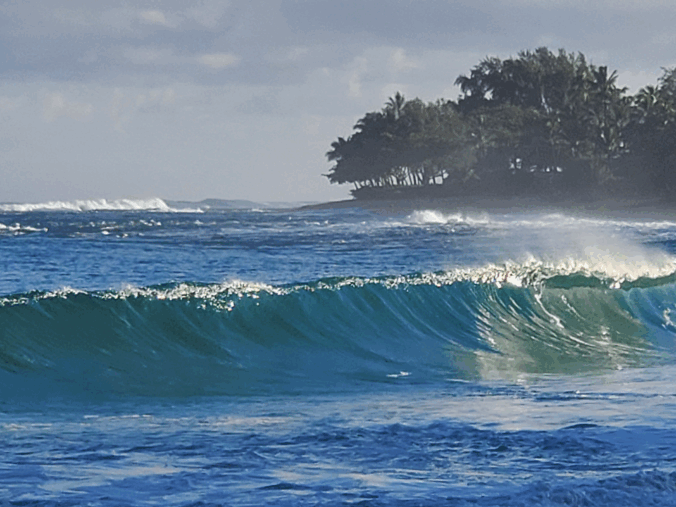
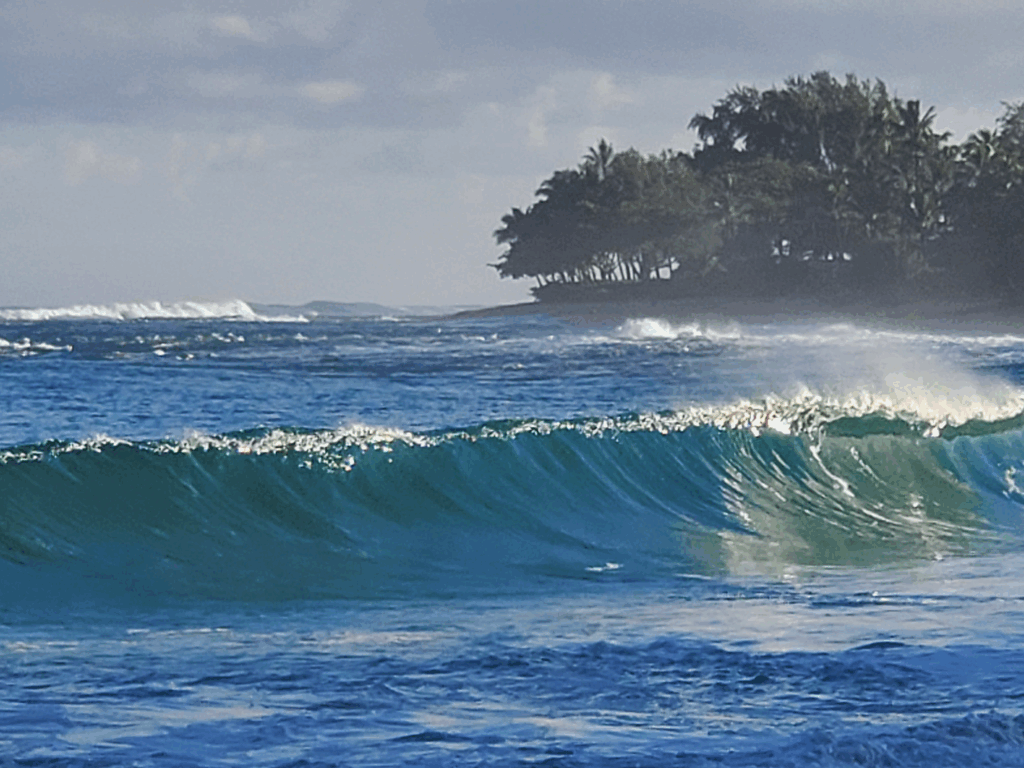 Aloha, as our global Island and Ocean community grows here in Kauai, Hawaii, locally, our hearts are spread out around the world right now to the families, friends, communities, and organizations we’ve spent time with and shared through the World Team journey.
 Coming into this Holiday tide, it has been difficult to be objective and share our progress and growth, as so much continues to change. We are grateful to participate in the United Nations 3rd Ocean Conference in Nice, France, this summer. We now have a global public policy ratified for Marine Protected Areas (MPAs) in the open Ocean, and finally at least addresses the topic of the areas Beyond Boundaries of National Jurisdiction (BBNJ), with some healthy infusion of what could be the beginning of more environmental and social justice for all species, and our water bodies, too. BBNJ is set to go into action next year…




 The Do the Math Movie! Screenings and House Parties